🔹 Introduction
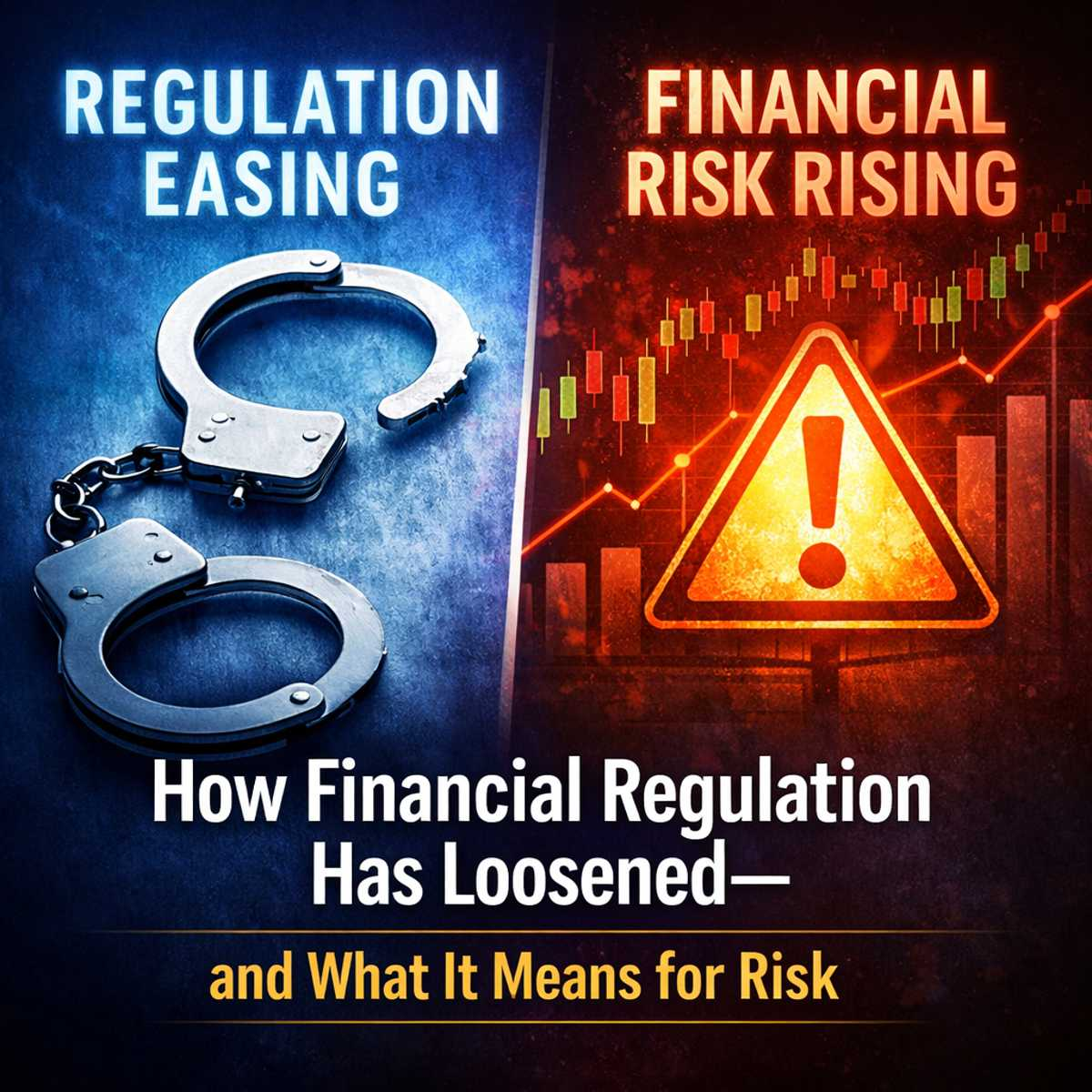
It feels like financial regulation has quietly loosened over time.
In the years following the Global Financial Crisis, the United States implemented sweeping reforms designed to stabilize the financial system and prevent another economic collapse. For a period, oversight was strong, enforcement was aggressive, and the rules governing banks and financial institutions were significantly tightened.
But as time passed, the intensity of that regulatory environment began to shift.
Some rules were adjusted. Others were softened. Enforcement priorities evolved.
Which raises an important—and increasingly common—question:
👉 Have we actually rolled back financial protections, or simply changed how they’re enforced?
The answer isn’t a simple yes or no.
Instead, what we’re seeing is a shift in intensity, focus, and regulatory philosophy—one that emphasizes targeted enforcement, economic flexibility, and selective oversight rather than broad, system-wide control.
👉 Why this matters:
Understanding this shift is critical because it directly impacts:
- Your exposure to financial risk
- The likelihood of fraud or misconduct going undetected
- How you make decisions about investing, borrowing, and long-term planning
🔹 Key Takeaways
- Financial regulation increased significantly after 2008 but has been partially scaled back over time
- Core laws remain in place, but enforcement intensity and priorities have shifted
- Some areas—such as mid-sized banks and corporate oversight—face less scrutiny today
- Financial crime prosecutions have declined in total volume but shifted toward larger, high-impact cases
- Risk has not disappeared—it has moved to less-regulated parts of the financial system
- Individuals and investors may now bear more responsibility for managing financial risk
🔹 Section 1: What Happened After the 2008 Financial Crisis?
The financial crisis of 2007–2009 exposed deep vulnerabilities in the global financial system—particularly in mortgage lending, banking practices, and risk management.
In response, policymakers introduced sweeping reforms to restore stability and rebuild trust.
At the center of these reforms was the Dodd-Frank Wall Street Reform and Consumer Protection Act, one of the most comprehensive financial regulatory overhauls in U.S. history.
Key Reforms Included:
- Creation of the Consumer Financial Protection Bureau (CFPB) to protect consumers from abusive financial practices
- Stricter mortgage underwriting standards, including the ability-to-repay rule
- Mandatory bank stress testing to assess financial resilience
- Implementation of the Volcker Rule to limit speculative trading by banks
- Expanded oversight of large financial institutions deemed systemically important
👉 Why this mattered:
These reforms marked a fundamental shift toward stronger oversight, increased transparency, and tighter risk controls across the financial system.
This period represented the most aggressive financial regulatory environment in decades.
🔹 Section 2: What Has Been Rolled Back Since Then?
Over time, the post-crisis regulatory framework has not been eliminated—but it has been adjusted, refined, and in some cases scaled back.
The result is a system that still contains its core safeguards but operates with less uniform intensity.
🔸 Subsection A: Banking Regulation Changes
The Economic Growth, Regulatory Relief, and Consumer Protection Act introduced significant changes:
- Raised the threshold for banks considered “systemically important”
- Reduced compliance and reporting requirements for mid-sized institutions
- Adjusted stress testing requirements
👉 Impact:
Many regional and mid-sized banks now operate under lighter regulatory scrutiny than in the immediate post-2008 period.
🔸 Subsection B: Changes in Enforcement Priorities
Regulatory agencies and the U.S. Department of Justice have increasingly shifted toward:
- Selective prosecution strategies
- Prioritizing large-scale, high-impact financial crimes
- Reducing emphasis on smaller or technical violations
👉 Result:
- Fewer total enforcement actions
- Greater focus on cases with broader economic or systemic impact
🔸 Subsection C: CFPB Enforcement Variability
The Consumer Financial Protection Bureau remains a central regulator—but its activity has varied:
- Periods of aggressive enforcement and large penalties
- Periods of reduced case volume and narrower focus
👉 Key takeaway:
The rules still exist—but enforcement intensity has become less consistent over time
🔸 Subsection D: Corporate & Global Enforcement
The application of the Foreign Corrupt Practices Act has evolved:
- More targeted enforcement
- Greater emphasis on cases affecting U.S. economic or national interests
- Less emphasis on broad, global corporate investigations
👉 Key Insight
The financial regulatory system wasn’t dismantled—it was recalibrated
Instead of broad, aggressive oversight across all areas, the system now emphasizes:
- Targeted enforcement
- Selective intervention
- Economic flexibility
🔥 Table: Then vs. Now
| Area | Post-2008 (Strict Era) | Recent Trend |
|---|---|---|
| Bank Oversight | Broad, strict | More targeted |
| Stress Testing | Frequent and comprehensive | Reduced for some banks |
| Corporate Enforcement | Aggressive and wide-ranging | More selective |
| CFPB Activity | High and consistent | Variable over time |
| Financial Crime Cases | Higher volume | Lower volume, larger cases |
🔹 Section 3: Are Financial Crime Prosecutions Declining?
One of the most common claims circulating online is that financial crime enforcement—especially fraud and white-collar prosecutions—is declining.
At a high level, there is truth to this trend, but it requires important context to fully understand what’s actually happening.
📊 What the Data Shows
Data from federal prosecution tracking (including sources like TRAC and legal analyses) indicates that:
- Total white-collar crime prosecutions have declined over time
- This trend has been developing gradually over more than a decade—not just recently
- Certain categories, such as tax-related prosecutions, have seen more noticeable drops
👉 This is often what viral charts and headlines are highlighting.
⚖️ The Critical Clarification
A decline in the number of cases does not necessarily mean a decline in enforcement overall.
Instead, enforcement has shifted in focus and strategy.
🔸 Fewer Cases Overall
Regulators and prosecutors are bringing:
- Fewer small or lower-level cases
- Less emphasis on technical or minor violations
🔸 Larger, More Complex Cases Increasing
At the same time, there has been a greater emphasis on:
- High-dollar fraud
- Multi-party or multi-jurisdictional cases
- Crimes with broader economic or systemic impact
👉 These cases often require:
- More time
- More resources
- More specialized expertise
📊 Trend Summary Table
| Metric | Trend |
|---|---|
| Total cases | ↓ Declining |
| Case size | ↑ Increasing |
| Enforcement focus | More targeted |
👉 What This Means
The key takeaway is not that enforcement has disappeared—it’s that it has evolved.
Financial crime enforcement is shifting from quantity → impact
Rather than pursuing a high volume of smaller cases, regulators are increasingly concentrating on:
- Larger, high-profile cases
- Systemic risks
- Significant financial harm
💡 Why This Matters
This shift has real-world implications:
- Smaller fraud cases may receive less attention
- Enforcement resources are concentrated on major threats
- Individuals and investors may need to be more vigilant
👉 In practical terms:
Not every risk is being filtered out at the regulatory level—some of that responsibility now falls on you
🔹 Section 4: Why Are Regulations Being Relaxed?
The evolution of financial regulation isn’t random—it reflects an ongoing policy debate about how much oversight is appropriate in a modern economy.
At the center of this debate is a fundamental question:
👉 How do you balance financial stability with economic growth?
✔️ The Case for Relaxation
Supporters of regulatory easing argue that excessive oversight can slow down the economy and limit innovation.
Key arguments include:
- Reduces compliance costs for businesses
Financial institutions spend significant resources meeting regulatory requirements. Reducing these burdens can improve efficiency and profitability. - Encourages lending and economic growth
When banks face fewer restrictions, they may be more willing to extend credit—supporting businesses, homebuyers, and overall economic activity. - Supports financial innovation
Emerging sectors like fintech and digital assets often grow faster in environments with fewer regulatory barriers, allowing new products and services to develop.
👉 From this perspective, lighter regulation can act as a catalyst for economic expansion and innovation.
⚠️ The Risks of Relaxation
Critics argue that loosening regulations can reintroduce the very risks that led to past financial crises.
Key concerns include:
- Weakens safeguards
Reduced oversight can allow risky practices to go unnoticed until they become systemic problems. - Reduces deterrence
If enforcement becomes less aggressive, financial institutions may take on more risk, knowing the likelihood of penalties is lower. - Increases potential for misconduct
Fraud, misrepresentation, and speculative behavior may become more common in less-regulated environments.
👉 History has shown that:
Periods of lighter regulation can sometimes lead to increased instability over time
👉 The Reality: A Balancing Act
Both perspectives have merit.
- Too much regulation can slow growth
- Too little regulation can increase risk
The financial system is constantly adjusting between these two forces—and that balance continues to evolve based on economic conditions and policy priorities.
🔹 Section 5: Where Has Risk Moved?
One of the most important—and often overlooked—developments in today’s financial system is this:
Risk hasn’t disappeared. It has moved.
As traditional banks became more tightly regulated after the Global Financial Crisis, financial activity began shifting into areas with less oversight and fewer restrictions.
Key Growth Areas
🔸 Non-Bank Lenders
- Mortgage companies and private lenders operating outside traditional banking regulation
- Often subject to fewer capital and oversight requirements
🔸 Private Credit Markets
- Rapid growth in private lending funds and institutional financing
- Less transparency compared to public markets
🔸 Financial Technology (Fintech) Platforms
- Digital-first platforms offering lending, payments, and investment services
- Innovation often outpaces regulatory frameworks
🔸 Digital Assets and Cryptocurrency
- Rapidly evolving markets with varying levels of oversight
- Increased exposure to volatility, fraud, and operational risk
👉 Why This Matters
These sectors are not inherently unsafe—but they often operate with:
- Less standardized oversight
- Fewer regulatory protections
- Greater complexity
The result is a financial system where risk is more dispersed and sometimes harder to detect
🔹 Section 6: What This Means for Your Financial Life
This shift in regulation and risk isn’t just a policy issue—it directly affects how you manage your money.
⚠️ Potential Risks You Should Be Aware Of
- Increased exposure to fraud
Less aggressive enforcement can create opportunities for bad actors. - Less regulatory “protection”
Not all financial platforms or products offer the same safeguards. - More complex financial products
Innovation can lead to opportunities—but also confusion and hidden risks.
✔️ What You Can Do to Protect Yourself
In a changing regulatory environment, your best defense is awareness and discipline.
Practical steps include:
- Verify financial platforms and investments
Understand who regulates them (if anyone). - Be cautious with high-return promises
Higher returns almost always come with higher risk. - Diversify your investments
Avoid concentrating risk in a single asset or platform. - Maintain an emergency fund
Financial resilience matters more when uncertainty increases. - Understand where your money is held
Know whether your funds are protected (e.g., bank vs. non-bank accounts).
📊 Where Is Your Money Protected
| Financial Product / Platform | Regulated? | Protection Type | Key Risk |
|---|---|---|---|
| Bank Account | Yes | FDIC insurance (up to limits) | Bank failure (low risk) |
| Brokerage Account | Yes | SIPC protection (limited) | Market loss not covered |
| Retirement Accounts (401k/IRA) | Yes | Custodial + regulatory oversight | Market risk |
| Non-Bank Lending Platforms | Sometimes | Limited or none | Credit/default risk |
| Crypto Exchanges | Varies | Often none | Fraud, platform failure |
| Private Investments | Limited | Minimal oversight | Illiquidity, transparency risk |
👉 Section 7. From Regulatory Protection to Personal Responsibility
For decades, many investors and consumers operated with an implicit assumption:
If something goes wrong, the system will catch it.
And to a large extent—especially after the Global Financial Crisis—that assumption wasn’t entirely unreasonable. Stronger regulation, active enforcement, and clearer safeguards created a sense of structural protection.
But today, that landscape has changed.
Regulation still exists—but it is no longer a comprehensive safety net for every risk you face.
🔄 What’s Actually Changing?
The shift isn’t about removing protection entirely—it’s about where responsibility sits.
Then:
- Broad regulatory oversight
- Higher enforcement volume
- Greater reliance on institutions to prevent risk
Now:
- More targeted oversight
- Selective enforcement
- Greater reliance on individuals to recognize and manage risk
👉 In practical terms:
The system is catching big, systemic threats—but not necessarily every individual risk.
⚠️ What This Means for You
This shift has real consequences for how you approach your financial life.
1. Not All Financial Products Are Equally Protected
Two investments may look similar—but have completely different levels of oversight and protection.
- A bank account vs. a crypto platform
- A regulated brokerage vs. a private investment
👉 You need to know the difference before you invest
2. Fraud and Risk May Be Harder to Detect
When enforcement becomes more selective:
- Smaller scams may go unnoticed longer
- New financial products may outpace regulation
- Warning signs may be less obvious
👉 Due diligence becomes essential—not optional
3. Complexity Is Increasing
Modern financial systems include:
- New asset classes
- Digital platforms
- Hybrid financial products
👉 Complexity can create opportunity—but also increases the risk of misunderstanding what you’re investing in.
✔️ What You Should Do Moving Forward
If regulation is no longer your primary safety net, your strategy needs to evolve.
🔹 Build Financial Awareness
- Understand how your investments work
- Know who regulates (or doesn’t regulate) the platforms you use
- Stay informed about financial trends and risks
🔹 Strengthen Your Decision-Making Framework
Before making any financial move, ask:
- What are the risks?
- What protections are in place?
- What could go wrong—and how would I handle it?
🔹 Focus on Risk Management (Not Just Returns)
Shift your mindset from:
“How much can I make?”
To:
“What risks am I taking—and are they worth it?”
Key strategies include:
- Diversification across assets and platforms
- Avoiding concentration in speculative investments
- Maintaining liquidity through an emergency fund
🔹 Verify Before You Trust
In today’s environment:
- Don’t assume legitimacy based on appearance
- Research platforms, advisors, and opportunities
- Be cautious of urgency, guarantees, or overly complex explanations
👉 Section 8. The Key Shift: From Regulatory Protection to Personal Responsibility
For decades, many investors and consumers operated with an implicit assumption:
If something goes wrong, the system will catch it.
And to a large extent—especially after the Global Financial Crisis—that assumption wasn’t entirely unreasonable. Stronger regulation, active enforcement, and clearer safeguards created a sense of structural protection.
But today, that landscape has changed.
Regulation still exists—but it is no longer a comprehensive safety net for every risk you face.
🔄 What’s Actually Changing?
The shift isn’t about removing protection entirely—it’s about where responsibility sits.
Then:
- Broad regulatory oversight
- Higher enforcement volume
- Greater reliance on institutions to prevent risk
Now:
- More targeted oversight
- Selective enforcement
- Greater reliance on individuals to recognize and manage risk
👉 In practical terms:
The system is catching big, systemic threats—but not necessarily every individual risk.
⚠️ What This Means for You
This shift has real consequences for how you approach your financial life.
1. Not All Financial Products Are Equally Protected
Two investments may look similar—but have completely different levels of oversight and protection.
- A bank account vs. a crypto platform
- A regulated brokerage vs. a private investment
👉 You need to know the difference before you invest
2. Fraud and Risk May Be Harder to Detect
When enforcement becomes more selective:
- Smaller scams may go unnoticed longer
- New financial products may outpace regulation
- Warning signs may be less obvious
👉 Due diligence becomes essential—not optional
3. Complexity Is Increasing
Modern financial systems include:
- New asset classes
- Digital platforms
- Hybrid financial products
👉 Complexity can create opportunity—but also increases the risk of misunderstanding what you’re investing in.
✔️ What You Should Do Moving Forward
If regulation is no longer your primary safety net, your strategy needs to evolve.
🔹 Build Financial Awareness
- Understand how your investments work
- Know who regulates (or doesn’t regulate) the platforms you use
- Stay informed about financial trends and risks
🔹 Strengthen Your Decision-Making Framework
Before making any financial move, ask:
- What are the risks?
- What protections are in place?
- What could go wrong—and how would I handle it?
🔹 Focus on Risk Management (Not Just Returns)
Shift your mindset from:
“How much can I make?”
To:
“What risks am I taking—and are they worth it?”
Key strategies include:
- Diversification across assets and platforms
- Avoiding concentration in speculative investments
- Maintaining liquidity through an emergency fund
🔹 Verify Before You Trust
In today’s environment:
- Don’t assume legitimacy based on appearance
- Research platforms, advisors, and opportunities
- Be cautious of urgency, guarantees, or overly complex explanations
📊 Quick Self-Check: Are You Relying on Regulation Too Much?
| Question | If “No,” There May Be Risk |
|---|---|
| Do I know who regulates this investment? | You may lack protection |
| Do I understand how this investment works? | You may be exposed to hidden risks |
| Do I know where my money is held? | Access and safety could be uncertain |
| Could I explain this investment simply? | Complexity may be masking risk |
💡 The Bottom Line
Regulation is still a layer of protection—but it is no longer the only one you should rely on.
Your financial stability increasingly depends on:
- Your knowledge → Understanding systems, products, and risks
- Your decision-making → Evaluating opportunities critically
- Your risk management strategy → Protecting yourself from downside scenarios
💬 Final Thought
The most resilient investors aren’t the ones who assume they’re protected—they’re the ones who prepare as if they’re not.
👉 If a financial decision went wrong tomorrow, would your strategy absorb the impact—or depend on someone else to fix it?
💡 The Bottom Line
Regulation is still a layer of protection—but it is no longer the only one you should rely on.
Your financial stability increasingly depends on:
- Your knowledge → Understanding systems, products, and risks
- Your decision-making → Evaluating opportunities critically
- Your risk management strategy → Protecting yourself from downside scenarios
💬 Final Thought
The most resilient investors aren’t the ones who assume they’re protected—they’re the ones who prepare as if they’re not.
👉 If a financial decision went wrong tomorrow, would your strategy absorb the impact—or depend on someone else to fix it?
🔹 Section 9: Could Another Financial Crisis Happen?
It’s a question that naturally follows any discussion about regulation:
👉 Could another financial crisis happen?
The honest answer is nuanced.
Today’s financial system is not the same as it was leading up to the Global Financial Crisis. In many ways, it is stronger, more resilient, and better equipped to absorb shocks.
✔️ Stronger in Some Areas
🔸 Better-Capitalized Banks
Major financial institutions now hold more capital and liquidity than they did prior to 2008, making them more capable of weathering economic downturns.
🔸 Improved Transparency
Traditional financial markets benefit from enhanced reporting requirements, clearer disclosures, and more visibility into risk exposure.
🔸 Stress Testing and Risk Monitoring
Even with some adjustments over time, stress testing frameworks remain a core part of evaluating bank stability.
⚠️ Riskier in Other Areas
At the same time, new vulnerabilities have emerged.
🔸 Growth of Less-Regulated Sectors
As regulation tightened in traditional banking, activity shifted toward:
- Non-bank lenders
- Private credit markets
- Alternative financial platforms
🔸 Increased Complexity
Modern financial systems are more interconnected and technologically driven, which can make risks harder to identify—and faster to spread.
🔸 Financial Innovation
Emerging products and markets, including digital assets and fintech platforms, introduce new opportunities—but also new uncertainties.
👉 The Real Question
The next crisis, if it occurs, is unlikely to look exactly like 2008.
The more important question is:
“Where could the next risk emerge?”
History shows that financial instability often builds in areas that receive less attention, less oversight, or less understanding.
🔹 Section 10: Warning Signs to Watch
One of the most valuable financial skills you can develop is the ability to recognize early warning signs.
While no indicator guarantees a crisis, certain patterns tend to appear when risk is building in the system.
🚨 Key Warning Signals
🔸 Rapid Expansion in Credit Markets
When borrowing grows quickly—especially in new or lightly regulated areas—it can signal rising risk.
🔸 Loosening Lending Standards
Easier approval processes, reduced documentation, or riskier loan structures may indicate increasing vulnerability.
🔸 Surge in Speculative Investments
When asset prices rise rapidly without strong fundamentals, it may reflect excessive risk-taking behavior.
🔸 Increased Reports of Fraud or Scams
A noticeable rise in fraud cases can signal weaker enforcement or gaps in oversight.
👉 Why This Matters
Recognizing these trends early allows you to:
- Adjust your investment strategy
- Reduce exposure to high-risk areas
- Strengthen your financial resilience
Awareness is one of the most effective tools for managing financial risk.
❓ Frequently Asked Questions
Has financial regulation been removed since 2008?
No. Core regulations remain in place, but some requirements have been adjusted and enforcement intensity has shifted over time.
Are financial crimes still prosecuted?
Yes. Enforcement continues, but there is a greater focus on larger, high-impact cases rather than a high volume of smaller prosecutions.
Is the financial system safer today?
In some ways, yes—particularly within the traditional banking system. However, risk has shifted to less-regulated sectors, creating new areas of concern.
Does less regulation increase risk?
Potentially. Reduced oversight can allow risk to build more easily, especially in emerging or rapidly evolving markets.
✅ Comprehensive Checklist: Navigating Financial Risk in a Changing Regulatory Environment
Use this checklist to evaluate your financial decisions in a world where responsibility is increasingly shifting toward individuals.
🔍 1. Understand What You’re Investing In
Before committing money, make sure you can confidently answer:
- ☐ Do I understand how this investment works?
- ☐ Can I explain it in simple terms to someone else?
- ☐ What drives returns (income, growth, speculation)?
- ☐ What are the biggest risks involved?
👉 If you can’t explain it simply, you may not fully understand the risk.
🏛️ 2. Verify Regulation and Protection
Not all financial products are equally protected.
- ☐ Who regulates this platform or investment (if anyone)?
- ☐ Is this a bank, brokerage, or unregulated entity?
- ☐ Are there protections like FDIC or SIPC coverage?
- ☐ What happens if the company fails?
👉 Know the difference between “regulated” and “protected.”
📍 3. Know Where Your Money Is Held
Structure matters more than most people realize.
- ☐ Is my money held by a third-party custodian or the platform itself?
- ☐ Can I access my funds quickly if needed?
- ☐ Are there withdrawal restrictions or lock-up periods?
- ☐ Is this investment liquid or illiquid?
👉 Access and control of your money are just as important as returns.
⚠️ 4. Evaluate Risk vs. Return Realistically
Shift your mindset from chasing returns to understanding risk.
- ☐ Is the return consistent with the level of risk?
- ☐ Does this investment promise unusually high or “guaranteed” returns?
- ☐ What is the worst-case scenario?
- ☐ Could I financially recover if this investment fails?
👉 If it sounds too good to be true, it usually is.
🧠 5. Strengthen Your Decision-Making Process
Use a structured approach before making financial decisions.
- ☐ Have I researched this beyond marketing materials?
- ☐ Am I making this decision based on logic—not emotion or urgency?
- ☐ Have I compared alternative options?
- ☐ Did I take time to think before committing?
👉 Good decisions are rarely rushed decisions.
🛡️ 6. Build a Risk Management Strategy
Protection should be built into your financial plan.
- ☐ Am I diversified across different assets and platforms?
- ☐ Am I avoiding overconcentration in high-risk investments?
- ☐ Do I have an emergency fund in place?
- ☐ Is this investment aligned with my overall financial plan?
👉 Diversification reduces the impact of any single mistake.
🔎 7. Watch for Red Flags
Stay alert to common warning signs of risk or fraud.
- ☐ Pressure to act quickly (“limited time opportunity”)
- ☐ Guaranteed or unusually high returns
- ☐ Lack of transparency or clear information
- ☐ Overly complex explanations
- ☐ Difficulty withdrawing funds
👉 Red flags are often visible—if you slow down enough to notice them.
📊 8. Perform a Personal Risk Audit
Ask yourself these final questions:
- ☐ If this investment failed, would I be financially stable?
- ☐ Am I relying on regulation to protect me?
- ☐ Do I fully understand the risks I’m taking?
- ☐ Does this decision align with my long-term goals?
💡 Final Insight
In today’s financial environment, awareness is your first line of defense.
Regulation still plays a role—but it is no longer enough on its own.
The most resilient financial strategies are built on:
- Clear understanding
- Disciplined decision-making
- Proactive risk management
👉 Looking at this checklist, what’s one area where you can improve your financial decision-making starting today?
🔗 Continue Your Financial Journey
Building a strong financial foundation means going beyond one topic and understanding how everything connects. Explore these related guides to deepen your knowledge and strengthen your strategy:
- 👉 Understanding Financial Risk and Diversification
Learn how to spread risk across different assets and avoid overexposure to any single investment. - 👉 How to Avoid Investment Scams
Discover common red flags, fraud tactics, and practical steps to protect your money. - 👉 Building a Financial Plan in Uncertain Markets
Create a flexible, resilient plan that can adapt to changing economic conditions. - 👉 Economic Cycles and Market Behavior
Understand how markets move over time—and how to position yourself in each phase.
💡 Pro Tip: The more you connect these concepts, the stronger your overall financial decision-making becomes.
🔹 Conclusion: Regulation Has Changed—So Must Your Strategy
Financial regulation hasn’t disappeared—but it has clearly evolved.
The system that emerged after the Global Financial Crisis was built on strong oversight, aggressive enforcement, and broad safeguards. Today, that same system still exists—but it operates differently.
- Enforcement is more selective
- Oversight is more targeted
- Risk has shifted beyond traditional institutions
👉 The most important takeaway:
Less enforcement does not mean less risk—it often means risk is harder to see
At the same time, there’s a broader shift taking place:
Responsibility is gradually moving from regulators to individuals
This doesn’t mean the system is unsafe—but it does mean your role in protecting your financial future is more important than ever.
✔️ Action Steps to Strengthen Your Financial Position
If regulation is no longer your only safety net, your strategy needs to adapt.
1. Stay Informed About Financial Systems
Understand how financial products, institutions, and markets actually work—not just at the surface level.
2. Strengthen Your Personal Risk Management
- Diversify your investments
- Avoid overexposure to speculative assets
- Maintain liquidity through an emergency fund
3. Avoid Relying Solely on Regulatory Protection
Before committing money, ask:
- Who oversees this investment or platform?
- What protections are actually in place?
- What risks am I personally taking on?
💬 Final Thought
The financial landscape is changing—and awareness is your advantage.
👉 Do you feel more or less protected as an investor today—and why?
Your answer to that question may shape how you approach every financial decision moving forward.
Continue your education journey
• Policy & Household Finances
How laws and regulations influence financial outcomes at the family level.